
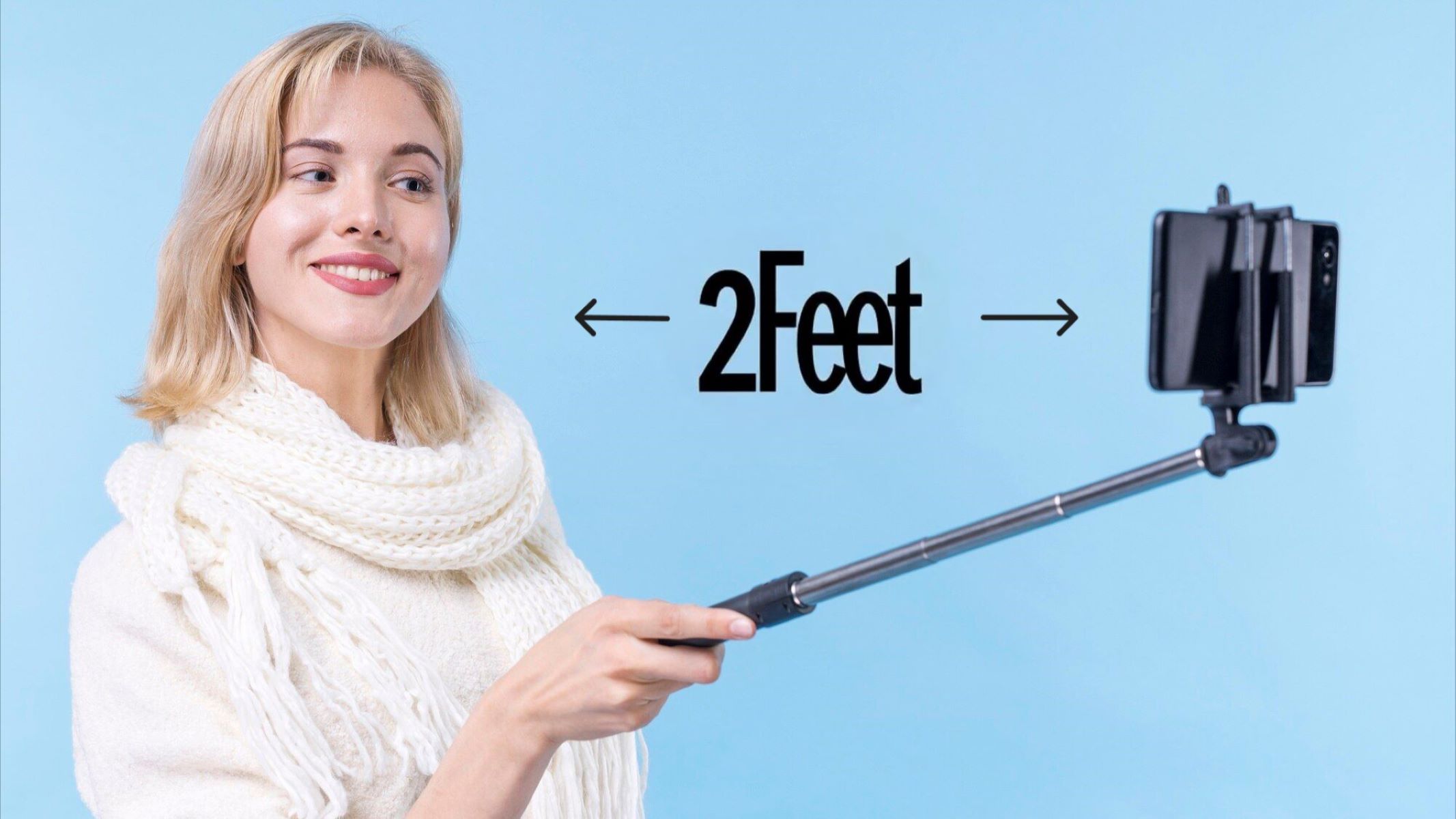
If you’ve ever wondered why your selfies look a bit “off,” or why video calls sometimes make you look strange, you’re not alone. One of the most overlooked yet crucial factors for great photos and videos is the distance between your camera and your face. Getting this just right can dramatically improve your appearance on screen and make your videos and photos look professional—even if you’re just using a smartphone.
Camera Distance
Simply put, camera distance refers to how far the camera lens is positioned from your face when you take a picture or record a video. This distance is a critical factor because it directly affects how much of your face and upper body fits into the frame, which is known as framing. For example, holding the camera too close will result in a tight, often distorted close-up that exaggerates facial features like your nose or forehead. On the other hand, placing the camera too far away may include unwanted background space or make your face appear smaller and less engaging. Getting the distance right helps ensure your face looks natural and balanced in the shot.
Factors Influencing Ideal Camera Distance
Several important factors influence what the ideal camera distance will be for any given situation. First, the type of camera or lens you are using plays a major role. Different cameras have lenses with varying focal lengths and fields of view, which affect how your face appears at different distances. For example, a smartphone with a wide-angle lens requires more distance to avoid distortion, while a DSLR with a zoom lens can be positioned closer.
Second, the purpose of your photo or video is crucial. Are you taking a quick selfie for social media, participating in a video conference for work, recording a professional headshot, or filming a vlog? Each use case demands a slightly different camera distance to achieve the desired effect. Lighting and background conditions are also essential considerations, as certain distances may affect how shadows fall on your face or how much of your environment is visible.
Finally, personal facial features and preferences matter as well. Some people might prefer a closer shot that highlights their eyes, while others want to minimize features that can be exaggerated by proximity. In the American context, where self-expression and individual style are highly valued, adjusting camera distance to match your unique look and comfort level is a smart approach.
Camera Type and Lens Focal Length
How Different Lenses Affect Framing
Not all cameras are created equal when it comes to how they capture images and videos. Most smartphones commonly used across America come equipped with wide-angle lenses. These lenses capture a broad field of view, allowing you to fit more into the frame without stepping back too far. However, this wide perspective comes with a drawback: when the camera is too close to your face, it distorts your features. Your nose might look unusually large, and your forehead or chin may appear exaggerated. This effect is noticeable in casual selfies or video calls taken without proper distance.
In contrast, professional cameras, like DSLRs or mirrorless models, offer the flexibility to change lenses with different focal lengths. This capability allows photographers and videographers to choose the best lens for the job, controlling how much of the scene or subject is captured and how facial features are rendered. The right lens can help flatten and balance features, creating more flattering images. This lens versatility is why professional portraits and broadcast videos in the US tend to use zoom or telephoto lenses instead of wide-angle options.
Wide-Angle vs Telephoto Lenses
- Wide-angle lenses (e.g., smartphones): These lenses are common in consumer devices and are designed to capture wide scenes. However, they require more distance between the camera and face to avoid distortion. For example, holding a phone about 2 feet away helps reduce the “big nose” effect and gives a more natural look. Many Americans use wide-angle lenses for casual photos, selfies, and Zoom calls, so knowing how far to hold your device is essential.
- Telephoto lenses (e.g., DSLR with zoom): These lenses have longer focal lengths and capture a narrower field of view. They allow you to position the camera closer to the subject without distorting facial features. Telephoto lenses compress the perspective, flattening the face slightly and producing more flattering portraits. This is why professional photographers in America often use telephoto lenses when taking headshots, business photos, or high-quality vlogs. They allow for closer framing with natural proportions.
Purpose of the Shot
The purpose behind taking a photo or video greatly influences the ideal camera distance. Different scenarios require different framing and presentation styles to achieve the best visual results. Understanding the intent—whether it’s a casual selfie, a professional portrait, or a video call—helps you adjust the camera placement accordingly.
For instance, selfies are often spontaneous and casual, typically captured at arm’s length. In contrast, professional portraits demand more deliberate setup, including greater distance and controlled lighting, to highlight your best features. Similarly, video calls require a balance between intimacy and professionalism, ensuring that you appear clear and engaging without awkward distortion.
| Purpose | Typical Camera Distance | What’s Captured | Key Considerations |
| Selfies | 12-18 inches (arm’s length) | Close-up of face | Risk of distortion if too close; casual |
| Video Calls | 20-30 inches | Head and shoulders | Eye contact, natural framing, professional |
| Portraits | 3-6 feet | Head and upper body | Uses zoom lenses; natural facial proportions |
Selfies
Selfies are one of the most common uses of personal cameras today, especially in the United States where social media is a dominant part of everyday life. Usually, the phone or camera is held about 12 to 18 inches from the face—roughly at arm’s length. This proximity allows the subject to clearly capture facial details, expressions, and mood. However, because smartphone lenses tend to be wide-angle, holding the camera too close can cause distortion. For example, your nose might appear larger or your face shape may look unnatural.
Despite these challenges, selfies taken at the right distance can look flattering and lively. Many Americans enjoy experimenting with angles and lighting to find the perfect shot. Using accessories like selfie sticks or ring lights can help maintain the ideal distance and improve overall photo quality.
Video Calls
Video calls have become an essential part of professional and personal communication, especially in the US’s growing remote work culture. The ideal camera distance for video conferencing is about 20 to 30 inches from your face, enough to comfortably capture your head and shoulders. This distance mimics how people naturally interact face-to-face, helping viewers feel more connected.
Placing the camera at this distance also prevents distortion and awkward angles that can occur when a webcam is too close or too far away. Additionally, it allows enough room to include some background for context without overwhelming the frame. For a professional appearance, the camera should be positioned at or just above eye level, promoting good posture and natural eye contact.
Portraits
Professional portraits are taken with more technical precision compared to casual selfies or video calls. Typically, photographers use cameras placed 3 to 6 feet away from the subject, paired with zoom lenses to capture natural and flattering proportions. This distance helps minimize perspective distortion, giving a more realistic representation of facial features.
In the United States, portrait photography is commonly used for corporate headshots, modeling portfolios, and special occasions. The combination of distance and lens choice allows for soft background blur (bokeh effect), enhancing the subject’s prominence. Portrait photographers carefully control lighting and camera distance to highlight the subject’s best angles and expressions, resulting in polished, high-quality images.
Effects of Camera Distance on Face Appearance
Perspective Distortion Explained
When your camera is positioned very close to your face, it exaggerates the size of the parts nearest the lens. This visual phenomenon is known as perspective distortion. For example, your nose, which is usually the closest feature to the camera, appears disproportionately large compared to other facial features like your ears or jawline. This creates a skewed or “bulged” appearance that is often unflattering.
Perspective distortion is especially common with wide-angle lenses found in many smartphones and webcams. Since these lenses capture a wide field of view, any objects near the camera appear larger than they actually are. This effect can unintentionally make your facial features look unnatural, which is why you may notice friends or colleagues appearing “different” during video calls.
How Close Distances Alter Features
Close camera distances don’t just enlarge parts of your face—they also change the overall shape and proportions. Shots taken from very close up tend to emphasize the center of your face—like your nose and eyes—while making the sides of your face recede. This imbalance can cause your face to look distorted and out of proportion, often resulting in a less flattering image.
Additionally, facial features that are farther from the camera, such as your ears or the edges of your jaw, appear smaller and less defined. This change in scale can affect how people perceive your face, sometimes making it appear wider or oddly shaped. The closer the camera, the stronger this effect becomes, so understanding how distance shapes your appearance is critical.
Ideal Distance for Natural Appearance
Experts generally recommend keeping the camera at least 2 feet (about 60 centimeters) away from your face when using wide-angle lenses, such as those on most smartphones and laptops. At this distance, perspective distortion is minimized, and your facial features appear more balanced and natural.
Maintaining this “sweet spot” distance allows the camera to capture your face in a way that is both flattering and true-to-life. For professional purposes like video calls, presentations, or portraits, following this guideline helps ensure you look your best on screen. If you need to be closer due to space or equipment limitations, using lenses with longer focal lengths can help compensate for potential distortion.